🌱 Intelligent Habitat Management
Turn bird detections into clear habitat actions, in the right order.
Your Habitat Right Now
Real-time ecological diagnosis — what's happening and why it matters
hollows
There are not enough tree hollows. Birds that nest in holes have nowhere to breed.
understorey density
The shrub layer under the trees is thin or missing. Small birds that need dense bushes for shelter are not being detected.
connectivity
This bush area is cut off from other bush areas. Birds cannot easily move between patches.
coarse woody debris
The ground is bare or too tidy. Birds that hunt for food on the ground are not being detected.
understorey density
One of the vegetation layers is missing. There's a gap between ground and canopy.
bark substrate
Trees with rough, peeling bark are missing. Birds that search bark for insects are not around.
Prioritise understorey_density, hollows, coarse_woody_debris, connectivity actions. 5 high-priority intent(s) detected.
Generated: 10/31/2026, 3:35:38 AM
What To Do First
Management actions in priority order — focus here before considering planting
hollows
What to do now
- •Retain all hollow-bearing trees even if they look dead
- •Avoid removing dead standing trees
- •Install nest boxes if natural hollows are very scarce
Signs it's working
- Hollow trees remain protected
- Owls or parrots begin using hollows or boxes
understorey density
What to do now
- •Allow shrubs to grow without slashing
- •Stop mowing under trees
- •Leave fallen branches to provide shelter
Signs it's working
- Shrubs grow taller than knee height
- Small birds start appearing in the understorey
connectivity
What to do now
- •Plant trees and shrubs linking bush areas together
- •Retain vegetation along fence lines
- •Protect any creek-line vegetation
Signs it's working
- Vegetation links begin to form between patches
- New bird species appear from connected areas
coarse woody debris
What to do now
- •Leave logs and branches on the ground
- •Avoid disturbing the soil surface
- •Allow native grasses to grow and seed
Signs it's working
- Logs and debris remain undisturbed
- Ground-foraging birds start appearing
understorey density
What to do now
- •Add mid-height plants where the gap exists
- •Retain saplings and let them grow up
- •Avoid creating single-layer canopy forests
Signs it's working
- Mid-layer vegetation fills in
- More bird species use the full height range
bark substrate
What to do now
- •Retain trees with rough or peeling bark
- •Avoid removing loose bark from trees
- •Keep older trees standing even if damaged
Signs it's working
- Rough-barked trees remain in the landscape
- Bark-foraging birds appear on tree trunks
If Planting Is Needed (Optional)
Planting is only suggested if natural regeneration is slow or absent after habitat actions are taken. Focus on structural changes first — plants support habitat, they don't replace it.
Canopy trees (long-term structure)
(4)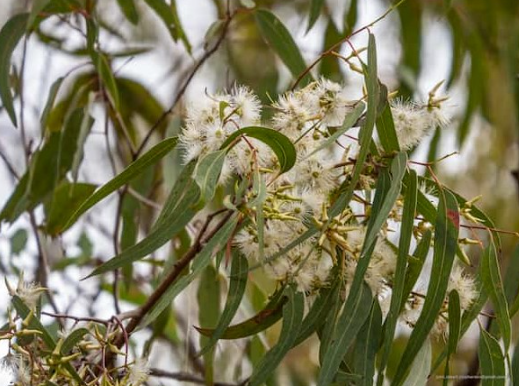
Forest Red Gum
Eucalyptus tereticornis
Why This Plant?
- •Primary nectar source for detected lorikeets
- •Large hollow-forming tree for nesting
🐦 Detected Birds
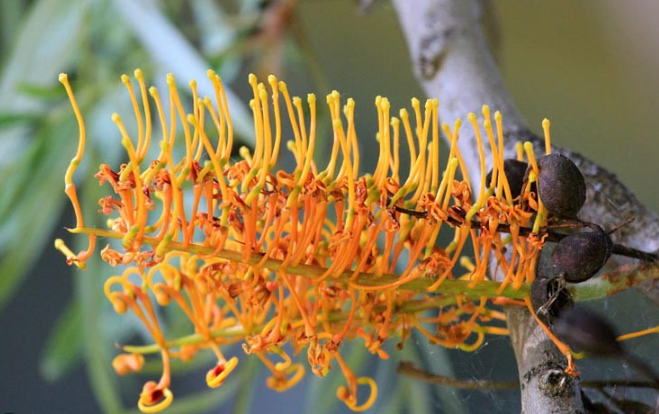
Silky Oak
Grevillea robusta
Why This Plant?
- •Golden flower spikes attract multiple bird species
- •Fast-growing canopy tree
🐦 Detected Birds
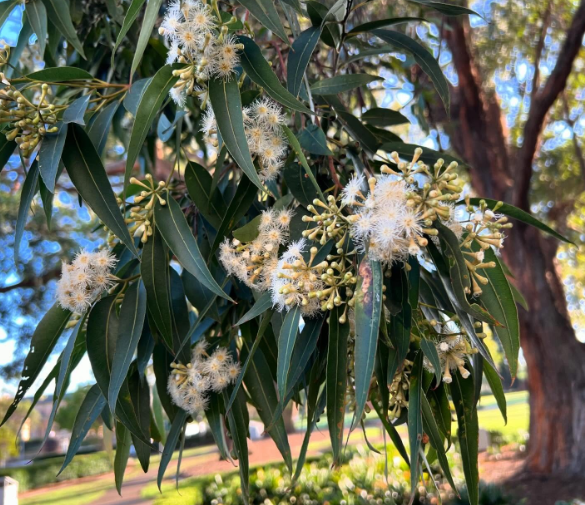
Tallowwood
Eucalyptus microcorys
Why This Plant?
- •Large canopy tree forms significant hollows
- •Cream flowers attract diverse bird species
🐦 Detected Birds

Scribbly Gum
Eucalyptus racemosa
Why This Plant?
- •Distinctive bark attracts insect-eating birds
- •Medium-sized tree perfect for understory
🐦 Detected Birds
Flowering shrubs (year-round food)
(3)
Weeping Bottlebrush
Callistemon viminalis
Why This Plant?
- •Bright red bottlebrush flowers are bird magnets
- •Dense weeping foliage provides nesting sites
🐦 Detected Birds

Banksia integrifolia
Banksia integrifolia
Why This Plant?
- •Iconic bottlebrush flowers provide year-round nectar
- •Woody seed cones attract seed-eating birds
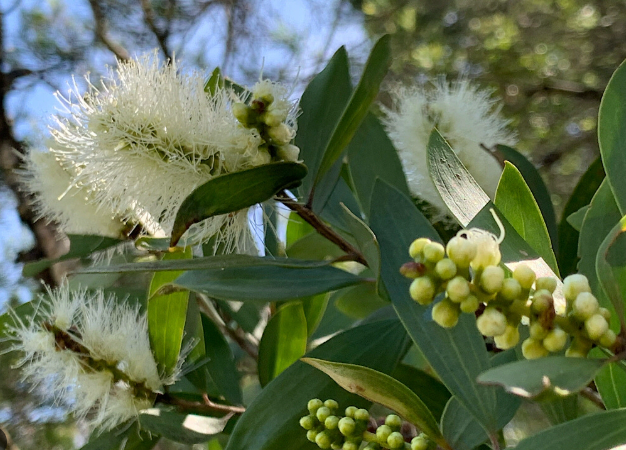
Broad-leaved Paperbark
Melaleuca quinquenervia
Why This Plant?
- •Dense foliage provides shelter for small birds
- •Cream bottlebrush flowers attract honeyeaters
🐦 Detected Birds
Note: Recommendations are generated from real-time acoustic detection data combined with ecological research. Focus on habitat structure first — planting supports habitat, it doesn't replace it.
Consult local experts for site-specific advice. Restraint is intentional.